
Sliding vs Hinged Wardrobes: Which Is Right for Your Bedroom?
A practical comparison of sliding and hinged wardrobes on space, cost, access and looks.
By Arfina Design Studio · Updated · 3 min read

Wardrobes are the largest piece of furniture in most bedrooms, so the door type shapes how the whole room works. Here is how sliding and hinged wardrobes compare.
Sliding wardrobes
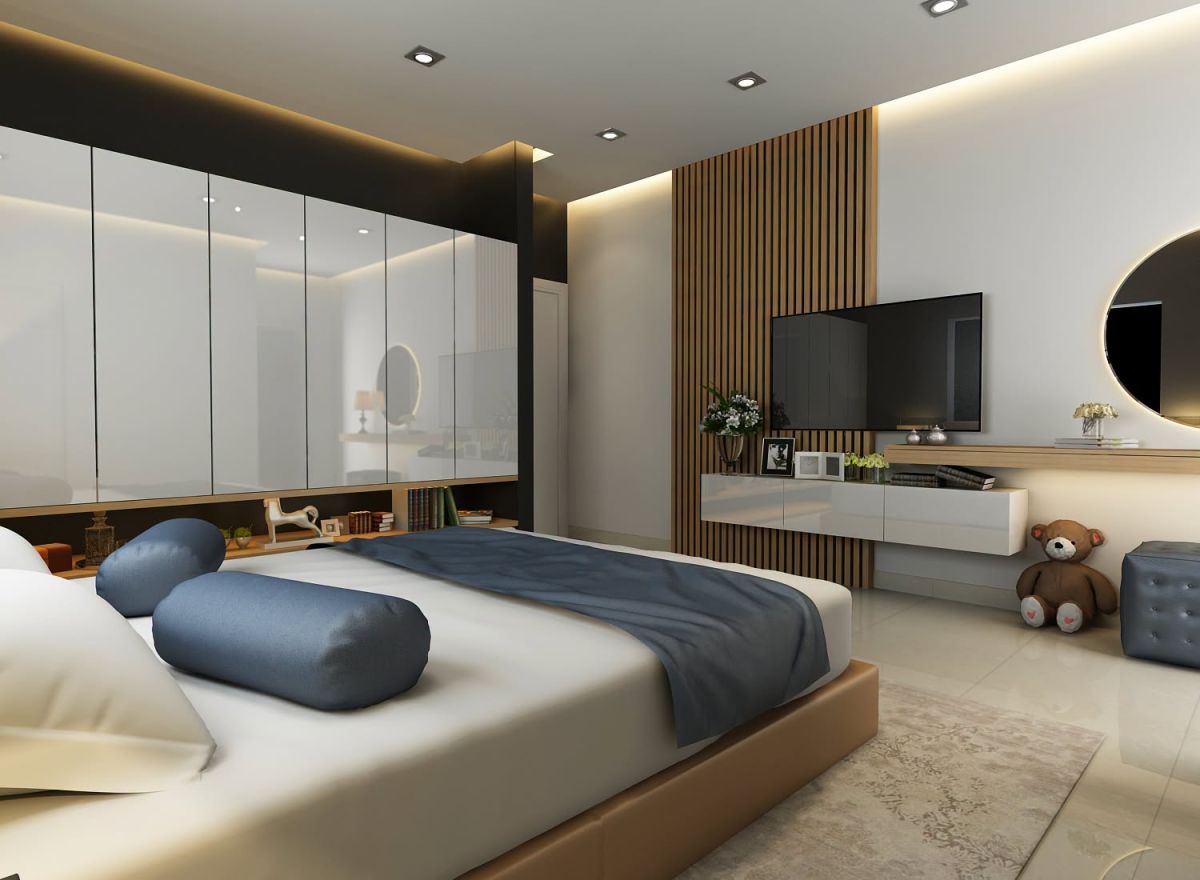
Sliding doors need no swing space, which makes them ideal for compact bedrooms or rooms where the bed sits close to the wardrobe. Large panels also give a sleek, modern look, especially in mirror, glass or lacquered finishes.
- Pros: saves floor space, modern look, large uninterrupted panels.
- Cons: you can only open one section at a time, and good sliding hardware costs more.
Hinged wardrobes
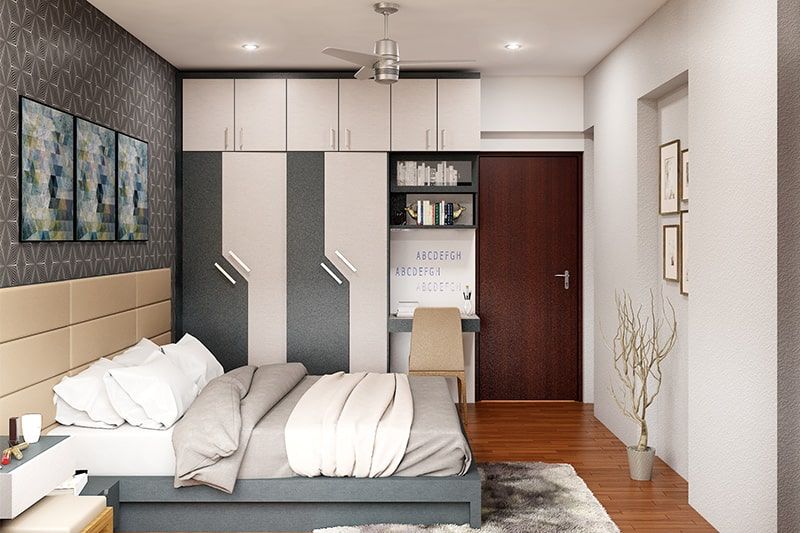
Hinged doors open fully, giving you complete access to every shelf at once. They are generally more affordable and easier to repair, and they suit both traditional and contemporary designs.
- Pros: full access, lower cost, flexible internal layouts.
- Cons: needs about 2 ft of clearance in front of the doors.
Our recommendation
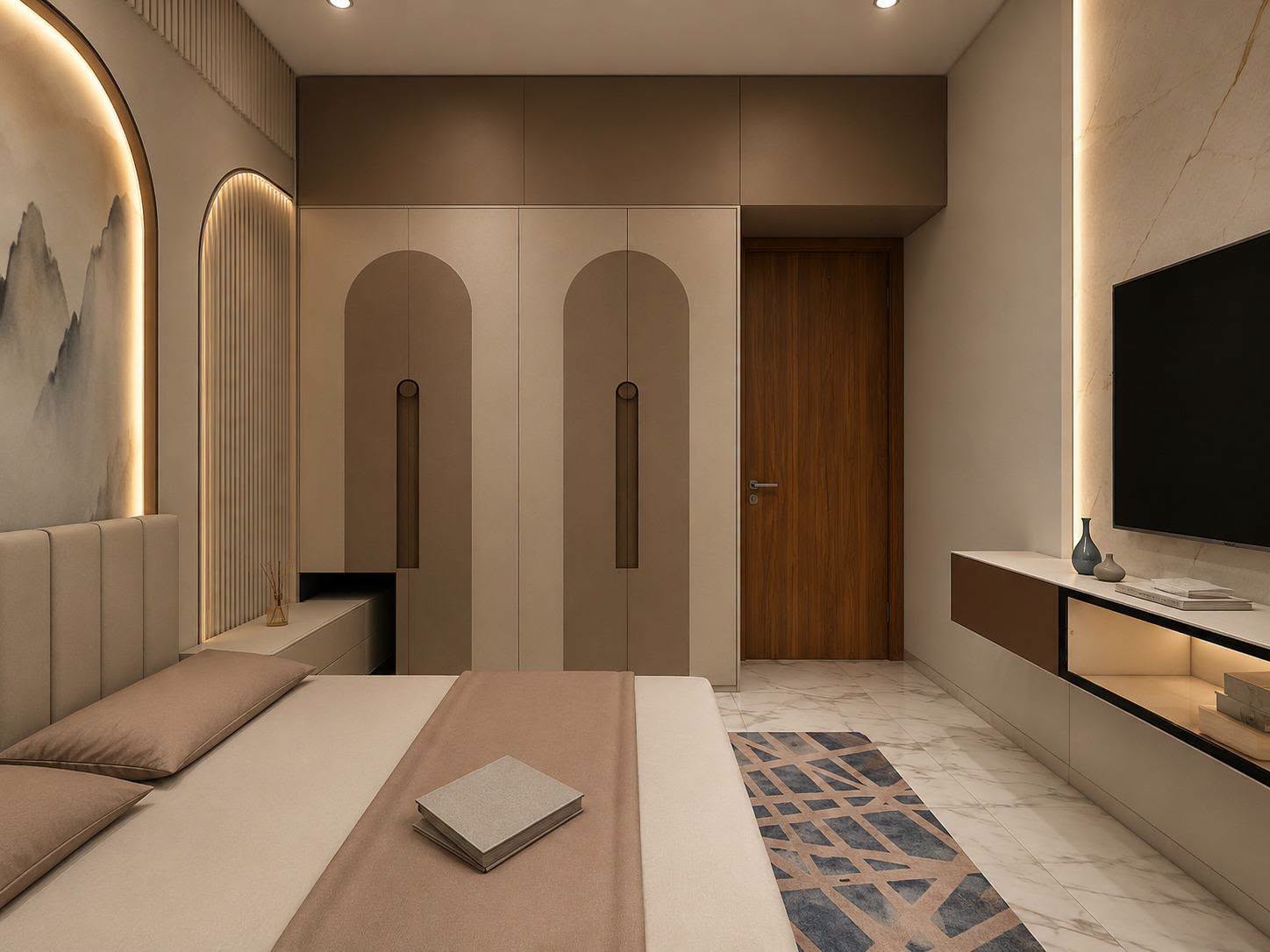
If the gap between the bed and the wardrobe is less than 3 ft, choose sliding. For spacious master bedrooms, hinged wardrobes with profile handles or handle-less gola designs look elegant and cost less.
Internal planning matters more
Whichever door you choose, plan the inside around how you dress: long hanging space for sarees and dresses, short hanging space for shirts, drawers for accessories, a loft for seasonal storage and a locker for valuables. Add sensor lighting so you never search in the dark.
Finishes that work for each type
Sliding wardrobes look best with large, uninterrupted panels: back-painted glass, mirror, high-gloss acrylic, or a combination such as a mirror centre panel with laminate sides. Hinged wardrobes suit a wider range of finishes, from matte laminates and fluted panels to PU paint and wood veneer, and work well with handle-less gola profiles for a clean, modern look.
Cost comparison
For the same size, a hinged wardrobe is usually the more economical choice, because hinges cost less than quality sliding track systems and shutters can be smaller. Sliding systems need heavier, perfectly flat shutters to run smoothly, so do not compromise on the track brand.
Maintenance
- Sliding: vacuum the bottom track every few months and check roller alignment once a year.
- Hinged: tighten hinge screws occasionally and adjust doors if they start to sag.
Quick decision guide
- Bedroom under 11 ft wide or bed close to the wardrobe: choose sliding.
- You want maximum storage visibility on a budget: choose hinged.
- Kids room: hinged with soft-close, so little fingers are safe.
- Walk-in or dressing area: open shelving or glass hinged shutters.
Frequently asked questions
Are sliding wardrobes more expensive?
Usually yes, because quality sliding tracks and larger shutters cost more than hinges.
What is the standard wardrobe depth?
Around 2 ft (600 mm) is standard for hanging clothes comfortably.
Talk to a designer
Planning something similar?
Get a free 3D design and an itemised quote from Arfina Design.